Echoes of Separation, Recognition, Co-existence
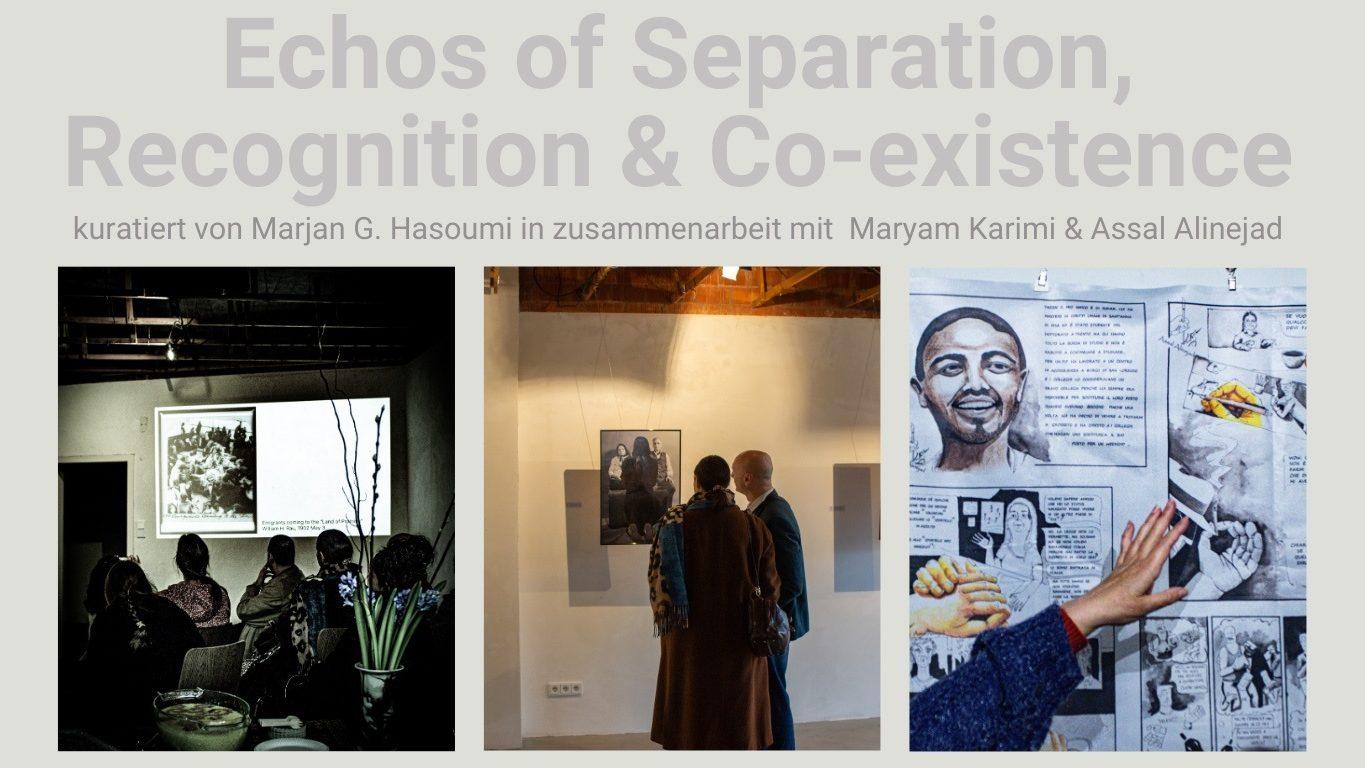
Reframing Migration as a Process
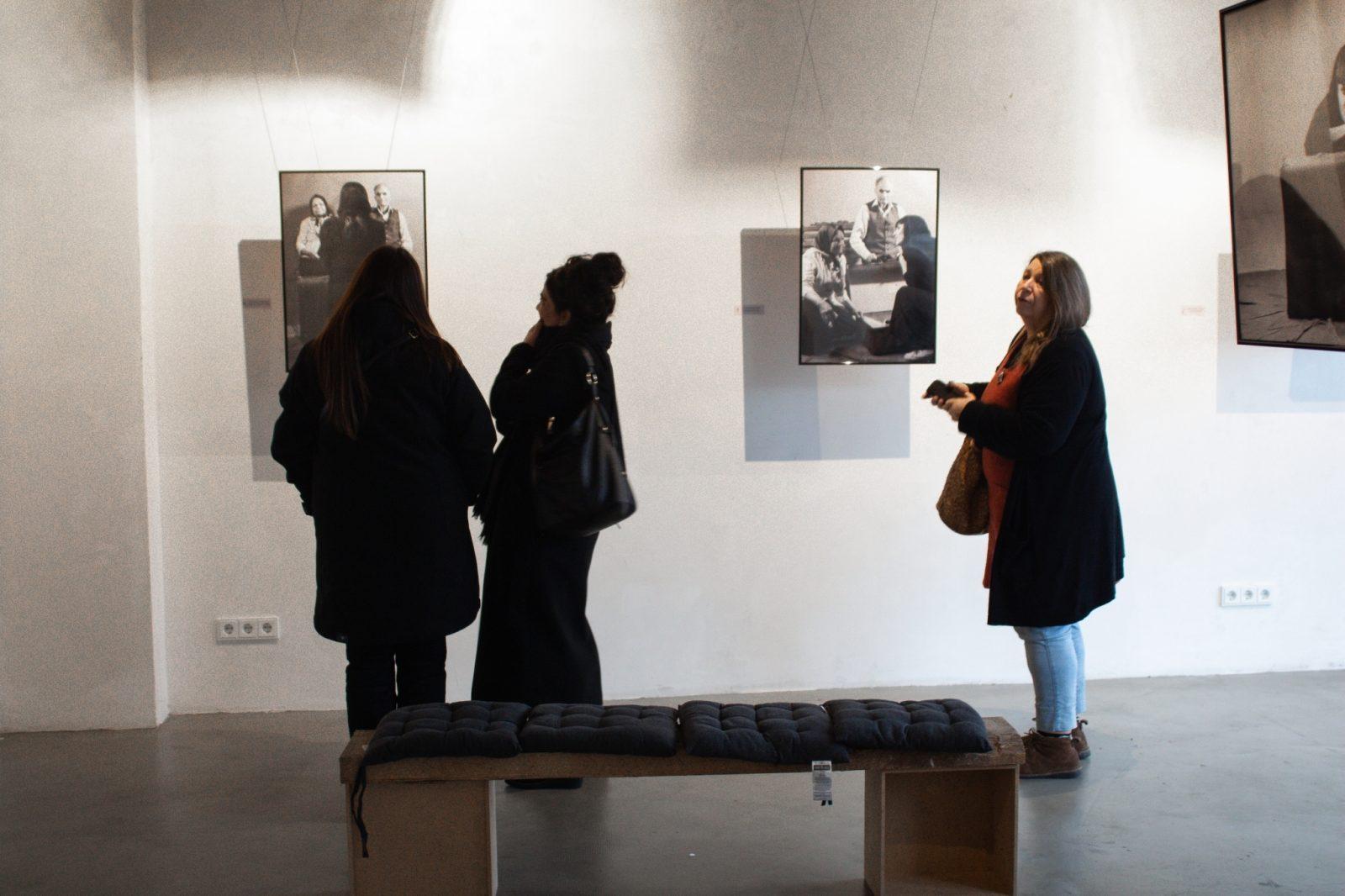
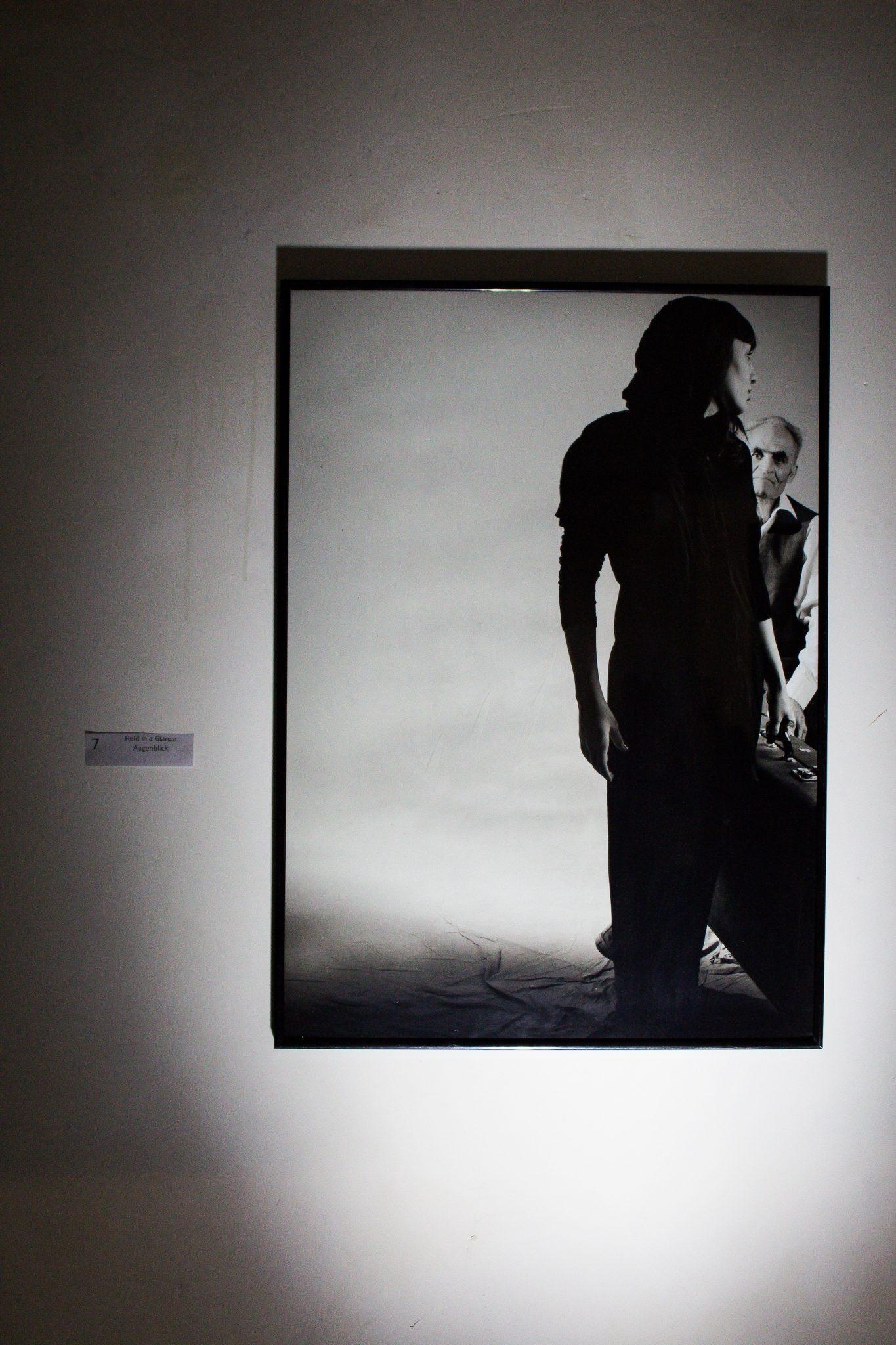
'Echoes of Separation, Recognition and Co-existence' is a curatorial project based on a photographic series started in 2014. It focuses on decision-making within the migration process. Rather than addressing migration as a moment of physical displacement, the series explores the moment of choice, the suspended state in which movement has not yet occurred, yet life is already changing.
Initially, the project focused on the decision-making process, exploring the associated hesitation, responsibility, uncertainty and hope. This perspective shifts the focus from an external event to an internal cognitive and emotional process.
In developing the project, design thinking was adopted as a methodological framework. Marjan Hassoumi’s background in architecture and product design played a significant role in shaping this approach. Training in these disciplines fosters a systemic way of seeing, one that is attentive to spatial relationships, human interaction and layered problem solving. Migration was therefore approached as a complex system requiring observation, reframing, analysis and reconstruction, rather than mere representation.
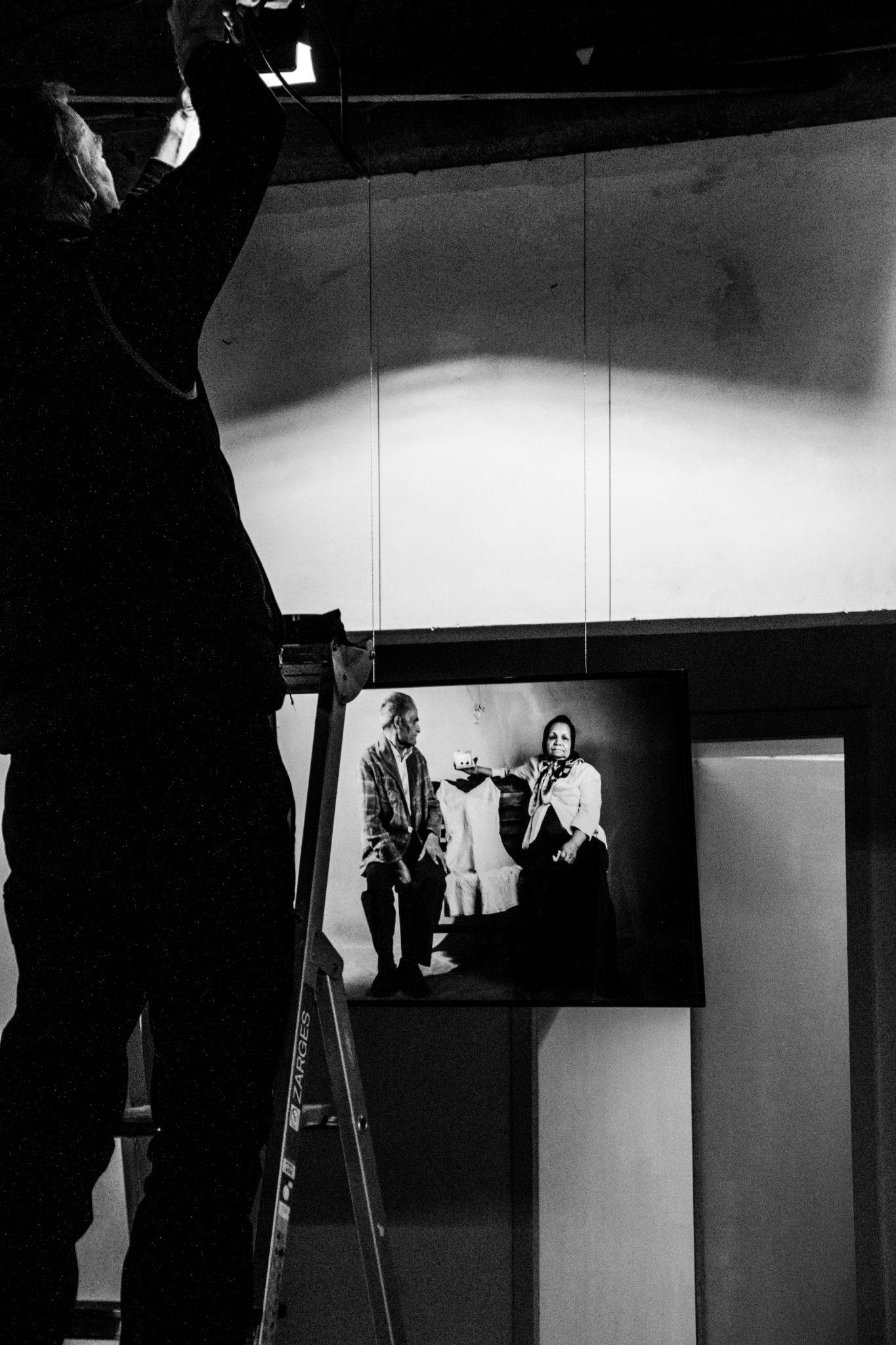
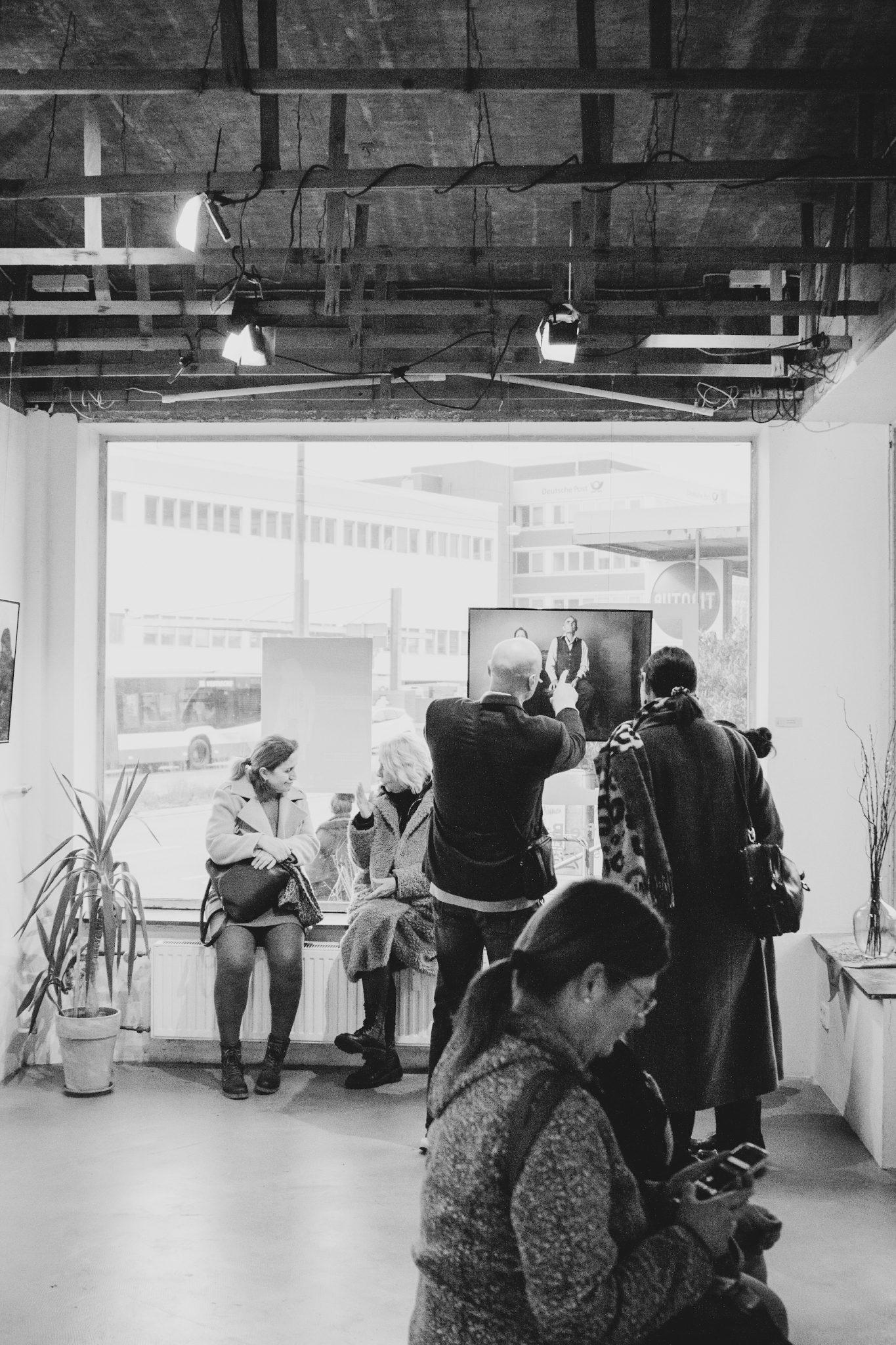
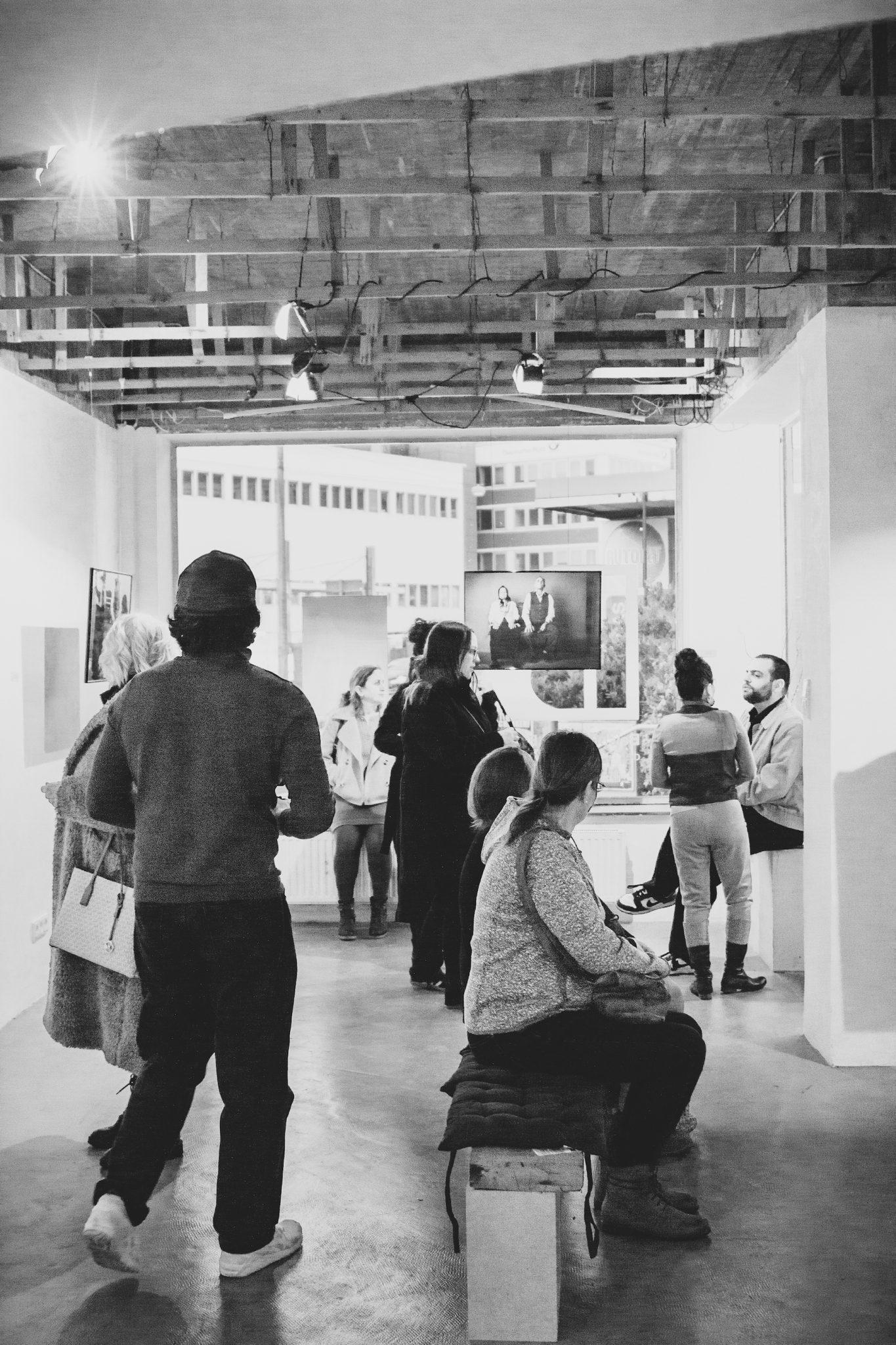
Within the exhibition design, spatial gaps, pauses and sequencing were treated as narrative elements. Audience members were not positioned as passive viewers, but as participants moving through a gradually unfolding decision-making process. The exhibition structure itself became a spatial translation of the lived experience of migration.
As
the project evolved, it expanded from personal narrative to academic
enquiry. Research examining post-migration reconstruction, including
identity reconfiguration, professional repositioning and socio-cultural
adaptation, was reviewed and integrated into the conceptual framework.
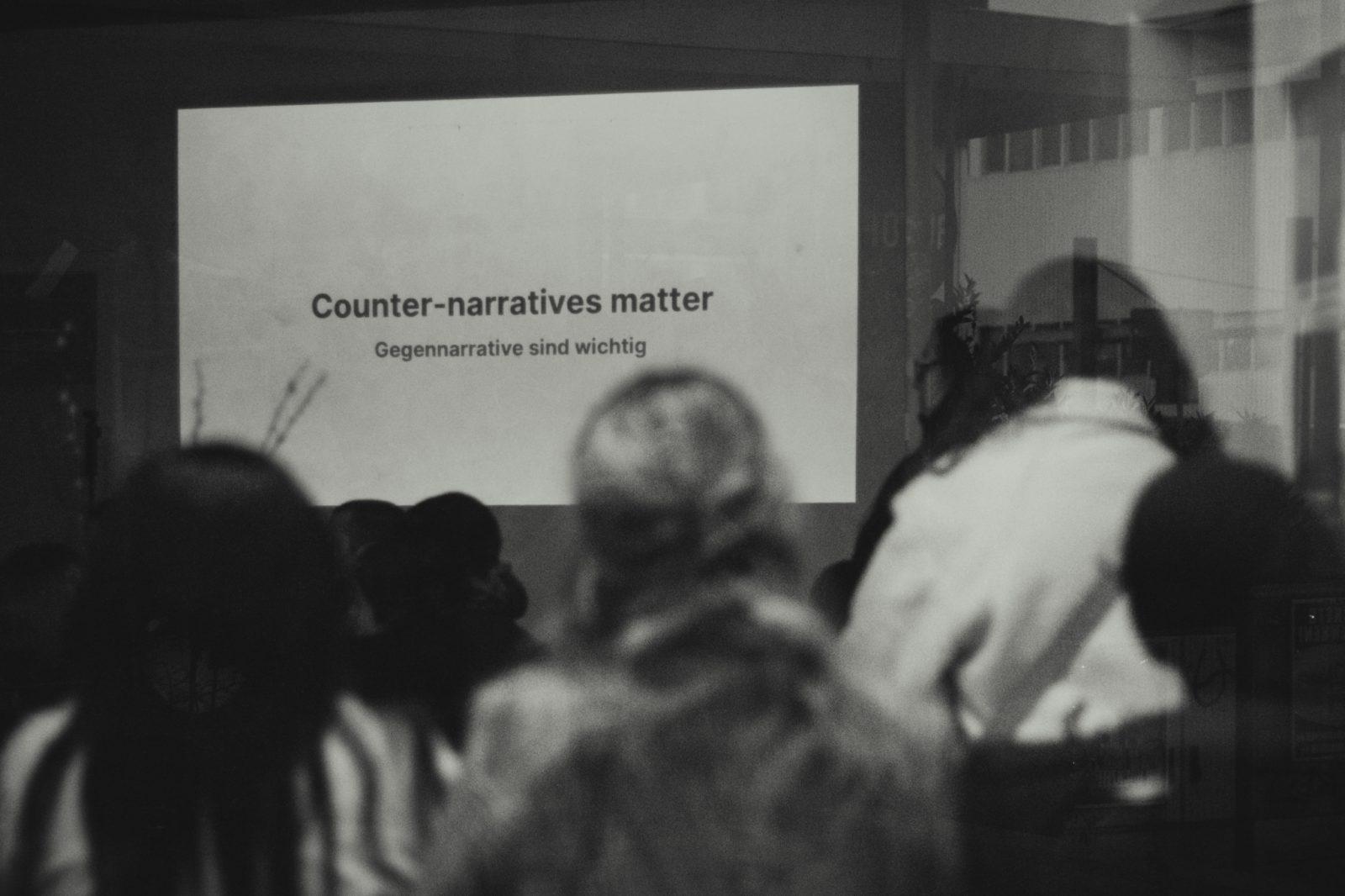
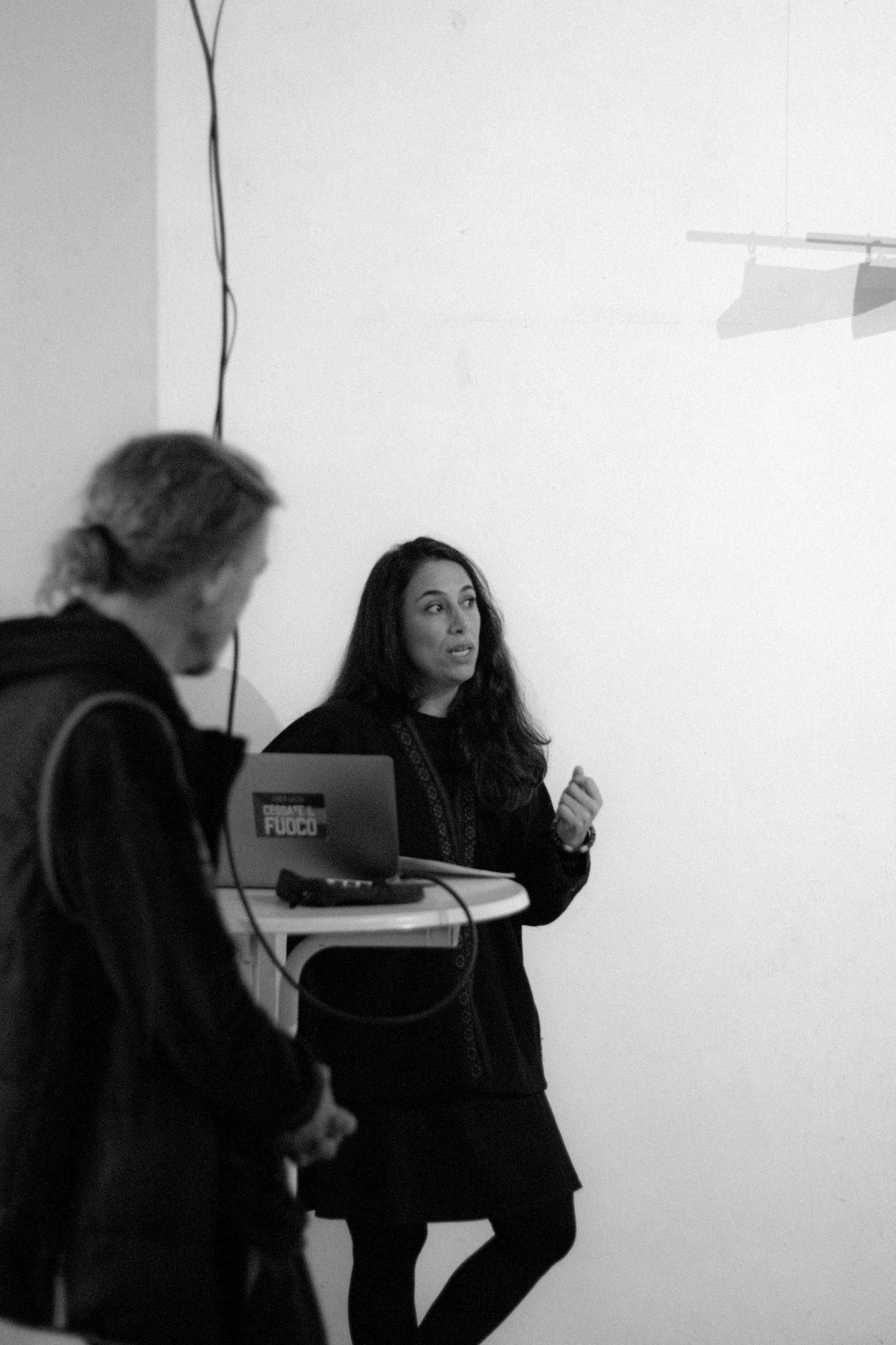
Within this curatorial framework, Dr. Maryam Karimi, Assistant Professor at the Politecnico di Milano, delivered a keynote lecture inviting the audience to rethink migration not as an exception, a crisis, or a deviation from normal life, but as a fundamental condition of human history. She presented historical moments and archival photographs of European immigrants arriving in the United States, questioning how, at that time, mobility was framed as opportunity, ambition, and hope, and how migrants were not described as a burden or a crisis.
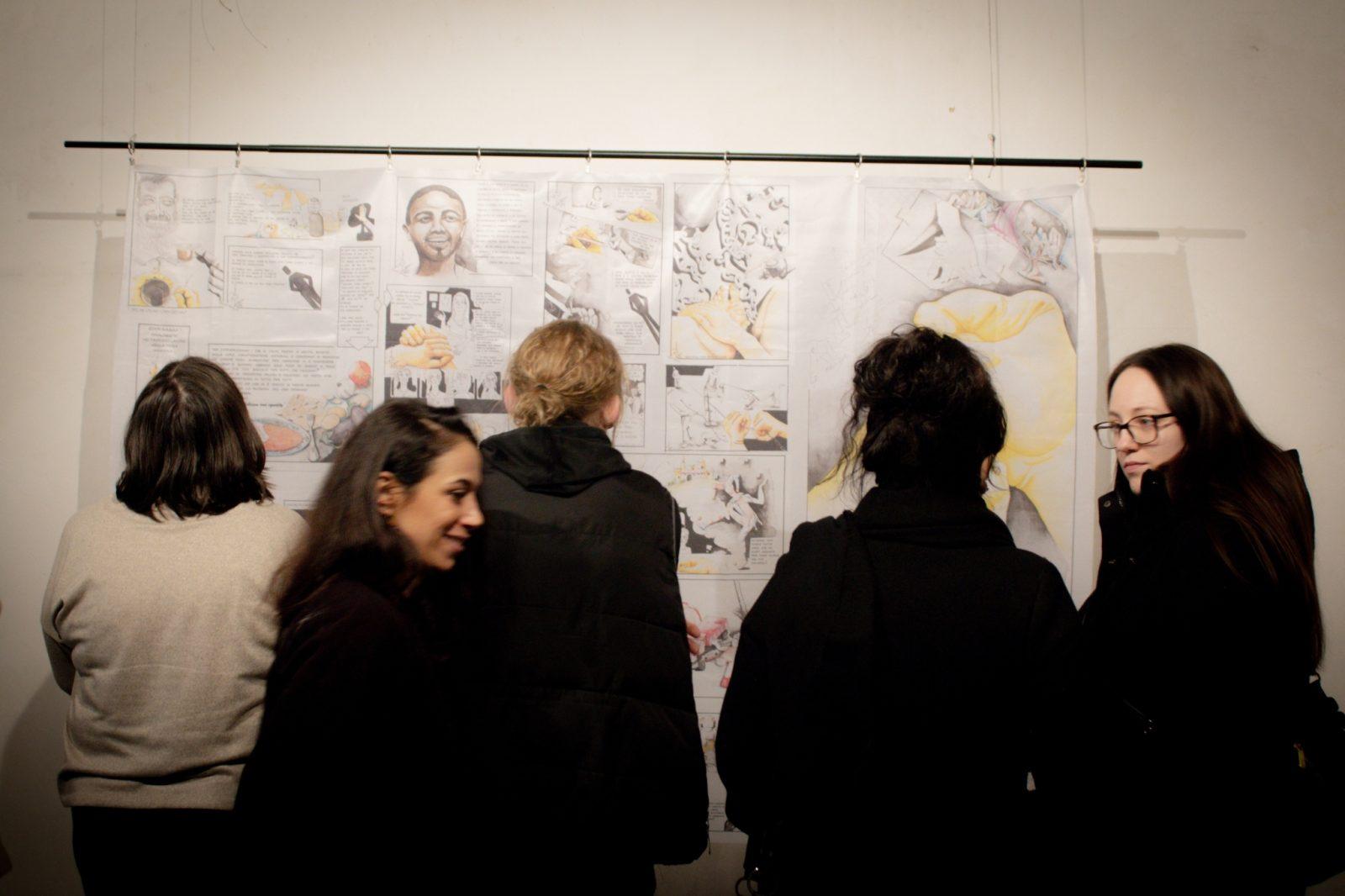
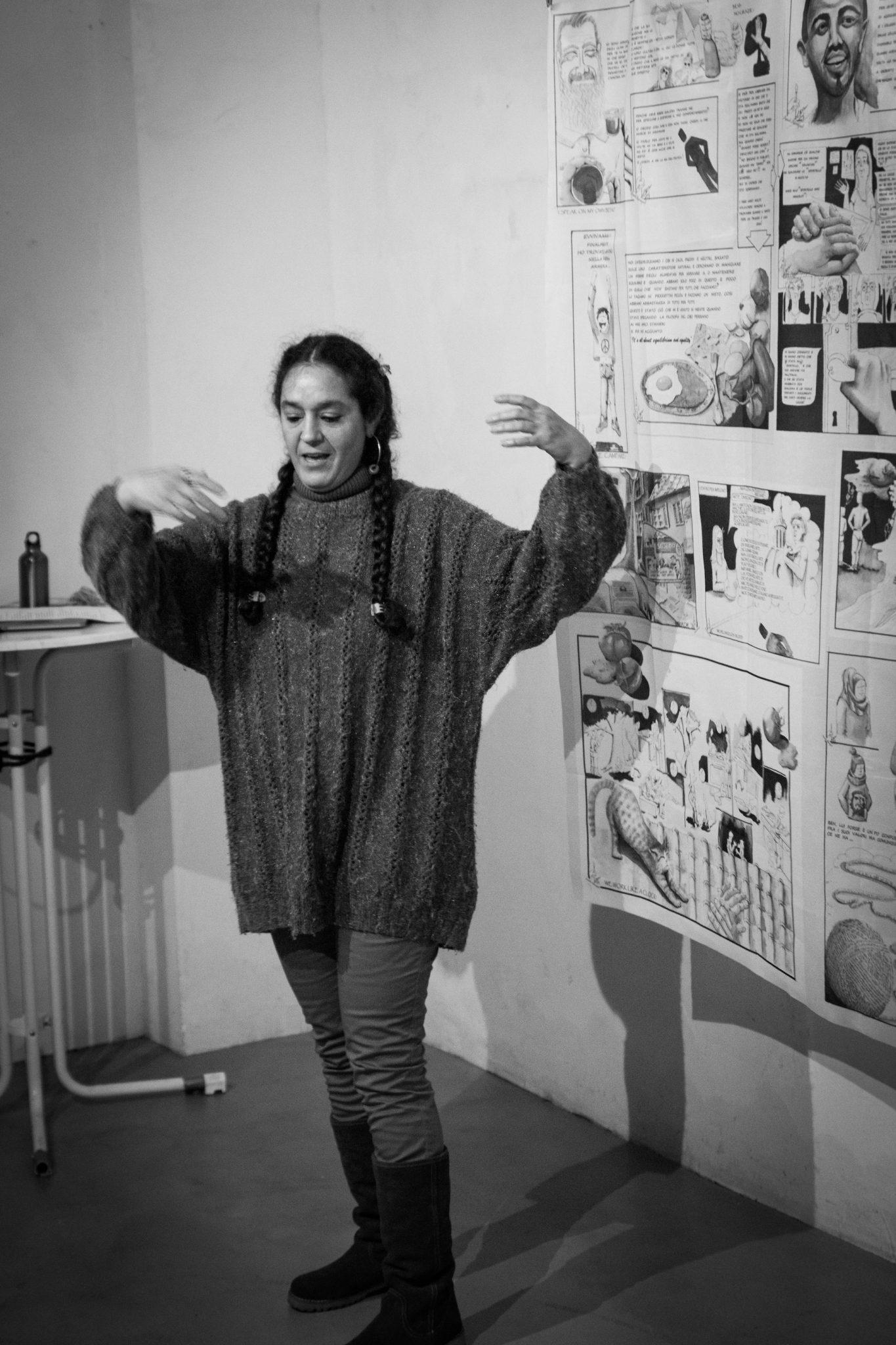
Alongside this academic dimension, collaborating with an artist specialising in contemporary storytelling and narrative reconstruction introduced an interdisciplinary element to the project. This collaboration enabled a dialogue between contemporary narrative practices and traditional Iranian storytelling forms, positioning storytelling as both representation and reconstruction of lived experience. The combination of photography, research and narrative practice created a polyphonic structure.
Although Marjan G. Hassoumi has organised multiple exhibitions in the past, this project marks her second curatorial experience. In this context, the curatorial role extended beyond selection and coordination. It acted as the conceptual architect of the framework, mediating between artistic practice, research discourse and spatial experience.
Ultimately, the convergence of lived experience, academic analysis, and artistic narration meant that migration could be understood as an ongoing process, rather than a rupture, one in which separation, recognition, and coexistence unfold simultaneously.
Migration als Prozess neu gedacht
Das kuratorische Projekt „Echoes of Separation, Recognition and Co-existence“ ist aus einer fotografischen Serie hervorgegangen, die 2014 begann und sich mit Entscheidungsprozessen im Kontext von Migration befasste. Dabei wurde Migration nicht als physische Bewegung verstanden, sondern als Moment der Entscheidung, als Zustand der Schwebe, in dem die Bewegung noch nicht stattgefunden hat, das Leben sich jedoch bereits verändert hat.
Im Zentrum stand der Akt der Entscheidung, das Zögern, die Verantwortung, die Unsicherheit und die Hoffnung, die in langfristigen Lebensentscheidungen eingebettet sind. Durch diese Perspektive wurde Migration von einem äußeren Ereignis zu einem inneren, kognitiven und emotionalen Prozess.
Bei der Weiterentwicklung des Projekts kam Design Thinking als methodischer Rahmen zum Einsatz. Dabei spielte der Hintergrund von Marjan G. Hassoumi in Architektur und Produktdesign eine wesentliche Rolle. Die Ausbildung in diesen Disziplinen förderte ein systemisches Denken sowie eine Sensibilität für räumliche Beziehungen, menschliche Interaktion und komplexe Problemlösungen. Migration wurde somit als vielschichtiges System verstanden, das Beobachtung, Neubewertung, Analyse und Rekonstruktion erfordert, und nicht nur Darstellung.
Bei der Gestaltung der Ausstellung wurden räumliche Abstände, Pausen und Sequenzen als narrative Elemente eingesetzt. Das Publikum wurde nicht als passive Betrachter positioniert, sondern als Teilnehmende, die sich durch einen sich entfaltenden Entscheidungsprozess bewegen. Die räumliche Struktur der Ausstellung übersetzte Migration in eine erfahrbare Form.
In diesem kuratorischen Rahmen hielt Dr. Maryam Karimi, Assistenzprofessorin am Politecnico di Milano, einen Grundsatzvortrag, in dem sie das Publikum dazu aufforderte, Migration nicht als Ausnahme, Krise oder Abweichung vom normalen Leben zu betrachten, sondern als grundlegende Bedingung der Menschheitsgeschichte. Parallel dazu brachte die Zusammenarbeit mit einer weiteren Künstlerin, die im Bereich zeitgenössischer Narration und erzählerischer Rekonstruktion tätig ist, eine interdisziplinäre Ebene in das Projekt ein. Durch diese Kooperation entstand ein Dialog zwischen zeitgenössischen Erzählformen und traditionellen iranischen Erzählpraktiken. Dabei wurde Erzählen nicht als bloße Darstellung, sondern als Rekonstruktion von Erfahrung verstanden. Das Zusammenspiel von Fotografie, Forschung und Narration führte zu einer vielstimmigen Struktur.
Obwohl Marjan G. Hassoumi bereits mehrere Ausstellungen realisiert hat, ist dieses Projekt ihre zweite kuratorische Erfahrung. Ihre Rolle beschränkte sich dabei nicht auf Auswahl und Organisation, sondern sie fungierte als konzeptionelle Architektin des gesamten Rahmens und vermittelte zwischen künstlerischer Praxis, wissenschaftlichem Diskurs und räumlicher Erfahrung.
Letztlich ermöglichte das Zusammenwirken von gelebter Erfahrung, akademischer Analyse und künstlerischer Narration, Migration nicht als Bruch, sondern als fortlaufenden Prozess zu verstehen, einen Prozess, in dem Trennung, Wiedererkennung und Koexistenz gleichzeitig wirksam sind.
Dokumentation: https://vimeo.com/manage/video...